
Introduction:
Choosing the best fabrics for tailored suits plays a crucial role in how a suit looks, feels, and performs over time. From breathability and durability to drape and comfort, fabric selection directly affects the quality of a tailored suit. This guide explores the best fabrics for tailored suits, helping you understand which materials work best for different occasions, climates, and personal style preferences.
Each fabric has a special characteristic that adds to the overall look, fit, and feel of your suit. In this article, we’ll examine the ideal materials for making suits.
With this information, you will be able to consider both the comfort of the clothes and their style.
7 Best Fabrics for Tailored Suits
1. Wool: The Timeless Classic
The ideal material for tailored suits is wool. This is due to a variety of factors.
It is famous for being breathable, naturally wrinkle-resistant, and temperature-regulating. Wool suits are also appropriate for a variety of seasons and events.
This adaptable item is a must-have in every man’s wardrobe, whether it is a cool tropical fleece for the summer or a warm flannel fleece for the cooler months.
2. Cotton: A Crisp and Casual Elegance
Cotton suits strike a balance between formality and comfort. Light and breathable, they’re perfect for warm weather and less formal occasions.
Choose a cotton suit for a more relaxed, yet still polished, appearance. Keep in mind that cotton suits might require more maintenance to avoid wrinkles.
3. Linen: Effortless Summer Sophistication
In warm, muggy areas, linen is the preferred fabric for maintaining fashion. Its breathability and natural texture lend a relaxed, effortlessly chic vibe.
Embrace the charming wrinkles that come with linen suits, as they add character to your ensemble.
4. Silk: Luxurious Elegance
Silk suits display refinement and glory. They feature a sleek and classy style that is perfect for formal occasions.
However, silk is delicate and prone to wrinkling, so it’s vital to balance its elegance with the requirement for upkeep.
5. Tweed: Rugged Charm and Warmth
Tweed suits are the epitome of fall and winter style. Your suit gains texture and personality from its thick, warm fabric, which makes it perfect for cooler months.
Tweed suits’ natural appeal provides a touch of refinement, making them ideal for outdoor gatherings and rural locations.
6. Cashmere: Unparalleled Softness and Comfort
For the ultimate in luxury, cashmere suits are hard to beat. Cashmere offers incredible softness and warmth, making it an excellent choice for winter occasions. Its plush texture and lightweight feel create a suit that’s both comfortable and elegant.
7. Synthetic Blends: Innovation and Practicality
Wool-polyester and wool-lycra blends are two examples of synthetic blends that are used in modern tailoring. These mixtures frequently provide improved elasticity, wrinkle resistance, and durability.
Although they might not have the same natural feel as more conventional fabrics, they provide individuals who want more from their suits practicality and adaptability.
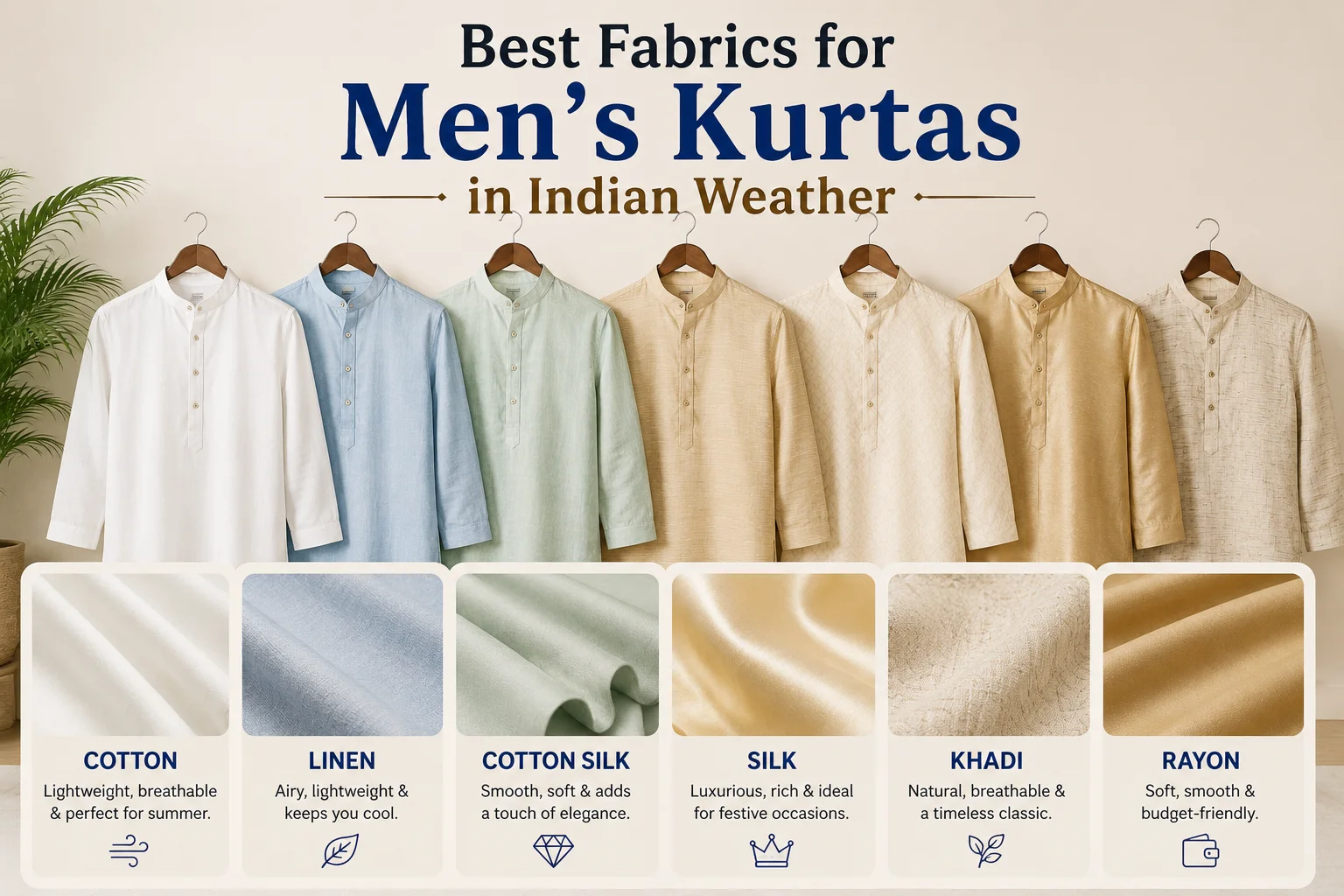
Best Fabrics for Tailored Suits Based on Indian Weather
Indian weather varies significantly across seasons, making fabric selection a critical factor when choosing tailored suits. Selecting the best fabrics for tailored suits based on climate ensures comfort, durability, and a refined appearance throughout the year.
For summer months:
breathable and lightweight fabrics are essential. Linen and cotton blends are commonly preferred due to their airflow and moisture-absorbing properties. These fabrics help regulate body temperature, making them suitable for daytime wear, casual suits, and warm-weather occasions.
During the monsoon season:
Humidity and moisture become key considerations. Lightweight wool blends and tropical wool fabrics are often recommended as they resist wrinkles better than pure cotton or linen while maintaining breathability. These fabrics offer a balanced structure without feeling heavy, making them practical for office wear and formal settings.
In winter:
Structured fabrics provide warmth and shape. Wool, flannel, and heavier wool blends are widely used for tailored suits during cooler months. These fabrics offer excellent insulation, drape well on the body, and enhance the overall silhouette, making them ideal for formal events and evening wear.
For year-round use:
Worsted wool remains one of the best fabrics for tailored suits in Indian conditions. Its versatility allows it to adapt to different temperatures while maintaining comfort, durability, and a polished finish. This makes it a popular choice for professionals and frequent suit wearers.
Choosing suit fabrics based on Indian weather not only improves comfort but also extends the life and performance of tailored garments, ensuring they remain functional and stylish across seasons.
Conclusion:
A careful balance between comfort and style must be found when selecting the fabric for your tailored suit.
Whether you’re aiming for classic elegance, casual sophistication, or contemporary innovation, there’s a fabric that suits your needs. Remember to consider the climate, occasion, and personal preferences when selecting the fabric for your next tailored suit.
Understanding the characteristics of various fabrics can help you make sure that your customized suit fits your personal fashion, is comfortable, and has an excellent look.